
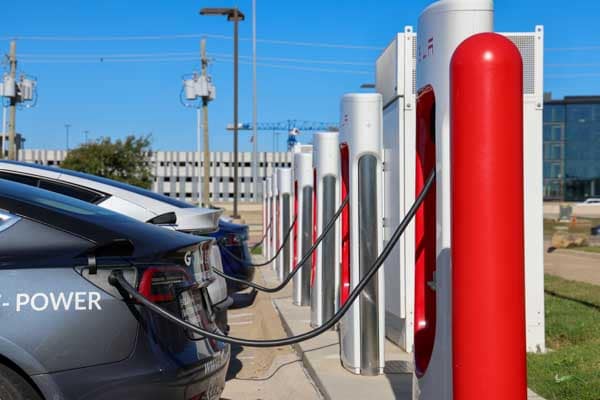
Commercial EV charging in Texas is becoming standard infrastructure for businesses that want to stay competitive, attract employees, and serve EV-driving customers. With the right planning, incentives and tax credits can cut installation costs significantly.
Why Commercial EV Stations in Texas Qualify for Incentives
EV charging incentives are designed to reward installations with long-term usage and measurable impact. Utilities and municipalities prefer chargers installed where they will be consistently used and support the workforce or the community. That makes commercial commercial EV charging stations at office parks, warehouses, retail centers, hotels, and fleet depots ideal candidates.
Most incentives are calculated per charging port rather than per project, which means businesses installing multiple stations can access higher rebate totals. Strategic planning for additional chargers upfront can unlock more savings and prepare a site for future growth in electric vehicle adoption.
For example, office campuses can install chargers for employees and visitors, ensuring accessibility and convenience. Hotels can offer EV charging as an amenity for guests, which may improve occupancy and satisfaction. Retail centers can attract EV-driving shoppers, increasing foot traffic. Warehouses and distribution centers benefit from fleet EV charging, keeping delivery vehicles operational throughout the day. Multifamily properties can serve tenants while also boosting property value and marketability.
Level 2 vs DC Fast Charging Incentives for Texas Businesses
EV charging incentives in Texas are structured around the type of charger being installed. Level 2 and DC fast charging serve different commercial needs and qualify for different incentive programs. Understanding this distinction helps businesses choose the right solution while maximizing available funding.
Level 2 incentives typically support workplaces, apartments, hotels, and retail locations. DC fast charging incentives are more commonly tied to public access sites, fleets, and highway corridor infrastructure.
Level 2 EV Charging Incentives
Level 2 chargers are the most common option for commercial and multi-family properties. They are ideal for locations where vehicles are parked for longer periods, such as offices, apartment complexes, hotels, and shopping centers.
In Texas, Level 2 charging incentives are widely available through electric utilities and federal programs. Many utility rebates help reduce the cost of charger hardware, electrical upgrades, and installation. Level 2 chargers installed at income-producing properties may also qualify for the federal Alternative Fuel Infrastructure Tax Credit.
Businesses installing Level 2 chargers often combine utility rebates with federal incentives to significantly lower project costs. These systems are also easier to integrate into existing electrical infrastructure, making them a practical starting point for commercial EV charging.
DC Fast Charging Incentives
DC fast charging incentives are designed for high-power charging infrastructure that supports rapid vehicle charging. These systems require greater electrical capacity and higher upfront investment, but qualifying incentives are often larger.
In Texas, DC fast charging incentives are frequently connected to federal and state infrastructure programs focused on expanding charging access along major highways and high-traffic corridors. These programs may include grant funding and performance requirements related to uptime, connector standards, and public accessibility.
DC fast charging is commonly used for fleet depots, travel centers, and retail hubs where fast vehicle turnaround is essential. While fewer incentive programs exist compared to Level 2 charging, approved projects often receive substantially higher funding support.
Austin Energy Workplace EV Charging Programs
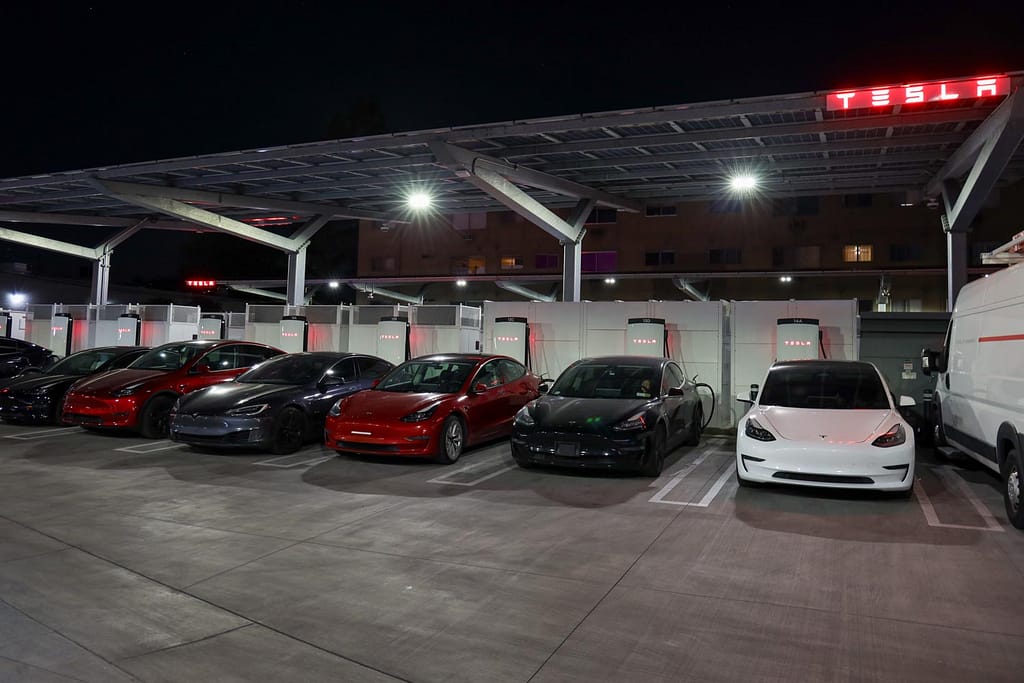
For businesses in Austin Energy’s service territory, the Plug-In Austin program provides one of the most significant opportunities to save on commercial EV charging station installation. The program applies to commercial EV charging stations installed for employees, tenants, customers, or fleet vehicles and calculates incentives per port.
A widely cited example is the “buy 7 get 1 free” scenario. A business installing eight charging stalls can qualify for up to $40,000 in rebates, effectively covering the cost of one full charger. This structure strongly benefits companies that plan for future demand rather than installing only the minimum number of stations.
Tesla Multi-Family and Commercial EV Charging Programs
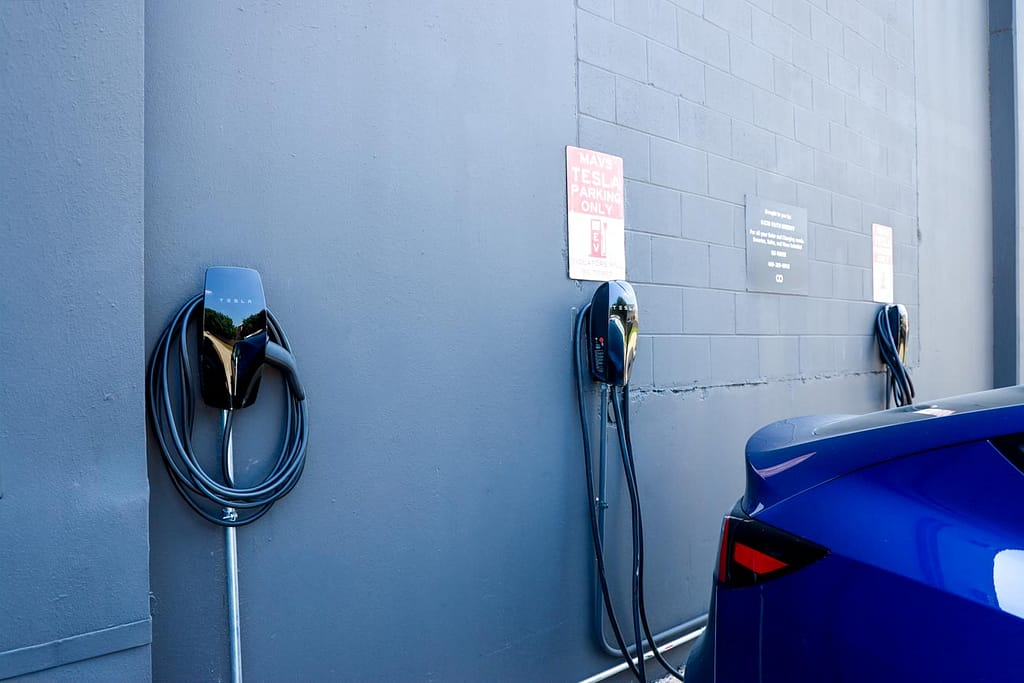
Tesla offers EV charging programs designed for commercial and multi-family properties across Texas. These solutions are commonly installed at apartment complexes, hotels, workplaces, and mixed-use developments where dependable daily charging is needed.
Tesla’s commercial charging focuses on Level 2 charging using Tesla Wall Connectors. These systems are built for shared use and scalable deployment, allowing property owners to expand charging capacity over time.
Multi-family properties often pair Tesla charging installations with utility rebates and federal incentives to reduce upfront costs while improving resident amenities. Commercial locations such as offices, hospitality sites, and retail centers use Tesla charging to support employees and attract EV-driving customers.
Tesla charging infrastructure integrates well into broader commercial EV charging strategies that include utility coordination, incentive optimization, and long-term electrical planning.
Planning Ahead Improves Project Economics
Many commercial properties make the mistake of installing only enough chargers for current usage. Retrofitting additional stations later is almost always more expensive due to labor, trenching, conduit, and panel upgrades. Installing extra capacity during the initial project is typically far more cost-effective.
Since rebates are applied per charging port, increasing charger count slightly can significantly improve net project economics. For example, adding two additional chargers to a six-stall installation may unlock enough incentive funding to offset much of their cost.
Federal Tax Incentives for Texas Business EV Chargers
Federal incentives play a major role in reducing the cost of installing EV charging stations for Texas businesses. These programs apply to both Level 2 and DC fast charging when installed at qualifying commercial or income-producing properties.
Federal incentives are designed to encourage businesses to expand EV charging access while offsetting installation, equipment, and electrical upgrade costs. When planned correctly, these incentives can be combined with utility rebates and manufacturer programs to significantly improve project economics.
Alternative Fuel Infrastructure Tax Credit Section 30C
The Alternative Fuel Infrastructure Tax Credit, commonly referred to as Section 30C, allows eligible businesses to claim a federal tax credit for installing EV charging equipment. This credit applies to both Level 2 and DC fast chargers installed at commercial properties.
Qualifying projects may recover up to 30 percent of total project costs, including charging equipment and installation expenses, when federal wage and apprenticeship requirements are met. Eligible locations include workplaces, multi-family properties, fleet facilities, and public-facing commercial sites.
Section 30C is available in designated census tracts and applies to income-producing properties rather than single-family residences. Proper documentation and project structuring are required to ensure compliance and maximize the available credit.
Federal tax incentives are often paired with utility rebates and local programs to reduce upfront investment while supporting long-term EV infrastructure planning.
NEVI Program Funding for DC Fast Charging in Texas
The National Electric Vehicle Infrastructure Program, commonly known as NEVI, provides large-scale federal funding to expand DC fast charging infrastructure across the United States. In Texas, NEVI funding is focused on building reliable, high-power charging stations along major highways and travel corridors.
NEVI incentives are designed specifically for DC fast charging and do not apply to Level 2 installations. These programs target public access locations where drivers need fast, consistent charging to support long-distance travel and commercial transportation.
NEVI Funding Requirements and Eligibility
NEVI-funded charging stations must meet strict federal requirements related to charger power levels, uptime reliability, connector standards, and payment accessibility. Projects are typically required to provide publicly accessible DC fast charging with standardized connectors and transparent pricing.
In Texas, NEVI funding is administered through the Texas Department of Transportation and is primarily awarded to sites located along designated Alternative Fuel Corridors. Eligible locations may include travel centers, retail hubs, fleet depots, and highway-adjacent commercial properties.
NEVI funding often covers a significant portion of equipment and installation costs but requires detailed planning, utility coordination, and ongoing compliance. Businesses pursuing NEVI funding benefit from working with experienced commercial EV charging partners who understand program requirements and long-term operational obligations.
Utility and Local Incentives Beyond Austin Energy
Other Texas utilities occasionally offer EV-related rebates or support for commercial projects. Some programs offset major electrical upgrades, including transformer replacements, panel upgrades, or service expansion, which are often the largest costs in a commercial installation. Availability varies by utility, so early planning and pre-approval are crucial to secure funding.
Electrical Capacity, Load Management, and Smart Charging
Planning for electrical capacity is key. Utilities sometimes offer incentives for installations that include load management or networked charging, which helps reduce peak demand. Smart charging systems also allow businesses to control operational costs as usage increases.
Future-proofing the electrical infrastructure, such as installing spare conduit or additional panels, ensures a business can add chargers later without major retrofits while also qualifying for larger rebates upfront.
Tips for Maximizing Incentives:
- Combine Austin Energy rebates with federal tax credits wherever possible.
- Pre-wire for additional chargers to reduce retrofitting costs later.
- Include smart charging or load management to meet utility requirements and reduce demand charges.
- Plan installations early in the year to secure incentives and avoid construction delays.
- Document every eligible expense, including equipment, labor, and electrical work, for rebate and tax credit applications.
Long-Term Value of Workplace EV Charging
Incentives reduce upfront costs, but the business case for EV infrastructure extends far beyond rebates. Charging stations attract EV-driving customers, improve employee satisfaction and retention, increase property value, and support fleet electrification strategies. Planning now avoids costly retrofits in the future as EV adoption grows.
Examples and Strategic Planning
- Retail Centers: Installing eight chargers upfront can serve customers and staff, unlock maximum rebates, and avoid future construction costs.
- Office Parks: A larger installation can support multiple tenants while qualifying for federal credits.
- Fleet Operators: Planning for charging at depots ensures uninterrupted operations and may make the business eligible for additional utility or tax incentives.
- Hotels: Installing 4–6 chargers in the parking lot not only provides a guest amenity but also qualifies for workplace incentives if employees use them. Smart charging ensures stations are used efficiently during peak periods.
When planning commercial EV stations, timing matters. Rebates are often first-come, first-served, and utility pre-approval may be required. Coordinating installation schedules with rebate applications and federal tax deadlines ensures maximum value.
Commercial EV Charging Solutions with Good Faith Energy
At Good Faith Energy, we design commercial EV infrastructure with every available incentive in mind. From Austin Energy rebates to federal tax credits and workplace programs, each project is structured to maximize savings while delivering reliable, scalable charging solutions.
When planned carefully, installing EV chargers in Texas is less a cost and more a strategic investment. With the right incentives, installing eight chargers can truly feel like buying seven and getting one free.
Fact Checked by Lisa Musser