
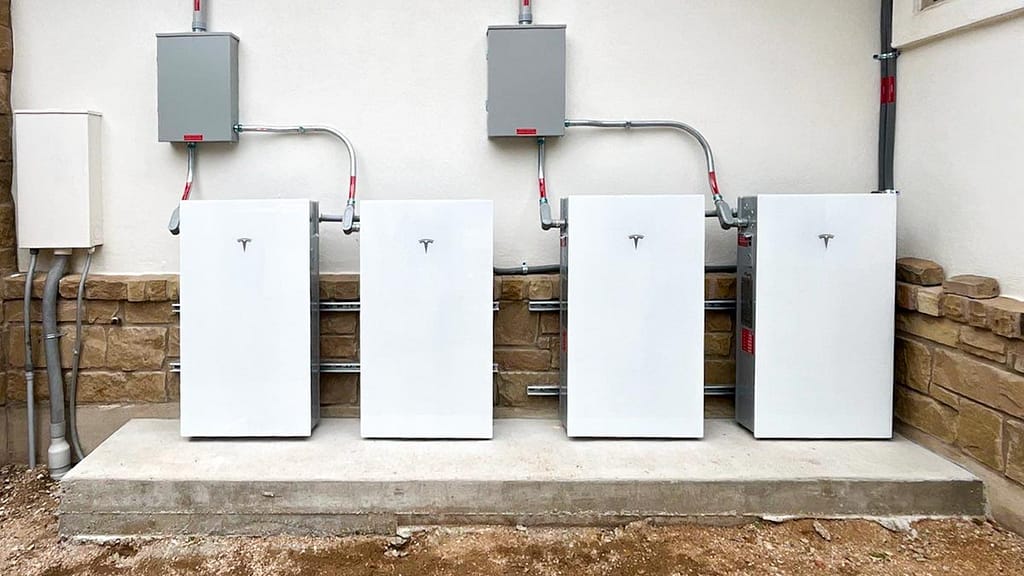
Tesla recently introduced a new Powerwall lease option for eligible Texas homeowners, offering access to two Powerwalls for an advertised effective cost of about $35 per month. While the low monthly payment may sound appealing, there is more to understand before signing a long-term energy agreement Powerwall Lease With Tesla.
As a Tesla Energy Certified Installer with more than 2,500 Powerwall installations across Texas, Good Faith Energy has seen firsthand how battery storage can provide homeowners with greater energy security and control. Our goal is to help homeowners understand not only the technology, but also the different ways it can be accessed, and if it’s the right decision for you and your home.
How Does the Tesla Powerwall Lease Work?
Tesla’s new program combines a Powerwall lease with Tesla Electric, Tesla’s retail electricity service available in eligible deregulated areas of Texas. The advertised $35 monthly price reflects credits associated with participating in Tesla Electric, rather than simply being the cost of leasing two Powerwalls.
According to Electrek’s coverage of Tesla’s new Powerwall lease, the underlying lease payment is higher and includes a 3% annual escalator. Homeowners should therefore look beyond the initial monthly price and review the complete agreement before enrolling.
How Tesla Gets to $35/month + tax?
| $122/monthTesla Powerwall Lease | − $87/month Tesla Electric Credit | = $35/month + tax Monthly Payment |
What Are the Benefits?
For homeowners who want backup power without purchasing a battery system upfront, the program offers several potential advantages.
- Lower upfront cost: Leasing can provide access to battery backup without the larger upfront investment associated with purchasing a system.
- Whole-home backup: Powerwall can automatically provide backup power when the grid goes down, helping keep important appliances and systems running during an outage. Learn more about Tesla Powerwall and whole-home backup.
- Smart energy management: Tesla Electric can work with Powerwall to manage energy usage and participate in virtual power plant programs.
What are the Drawbacks?
The $35 monthly payment may be attractive, but the advertised price comes with several conditions that homeowners should understand before signing a long-term agreement.
- The $35 payment depends on Tesla Electric. The actual Powerwall lease is $122 per month in the first year, with a 3% annual escalator. The $87 monthly credit is available only while you remain enrolled in Tesla Electric and meet the program requirements. If you decide to switch electricity providers, you would no longer qualify for the credit, meaning your lease payment would increase substantially.
- The cost increases over time. The 3% annual escalator means the $122 lease payment does not remain fixed. While the $87 credit currently reduces the first-year payment to $35 plus tax, homeowners should consider how the lease payment and credit fit into their long-term energy costs.
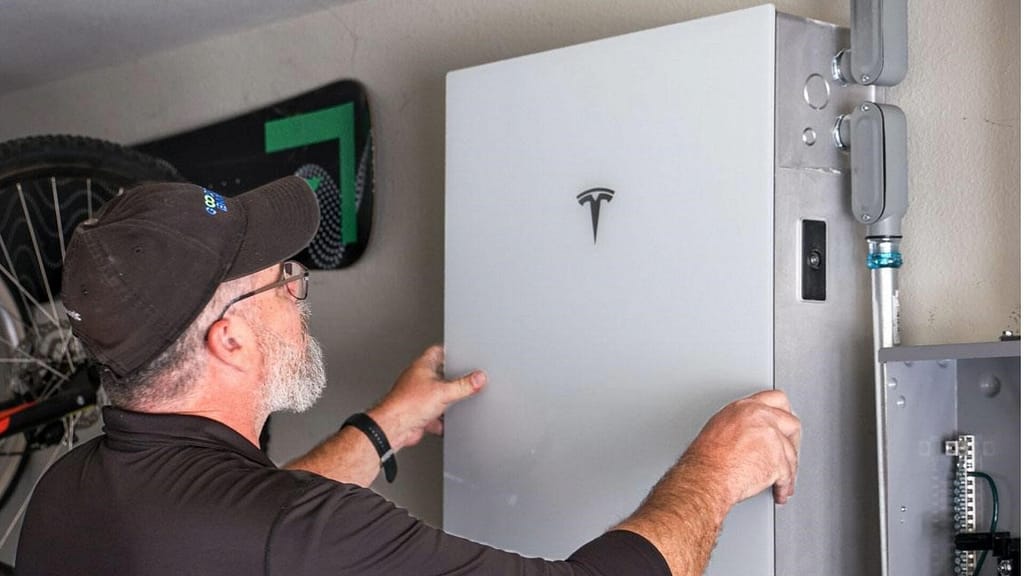
- Tesla manages the batteries. As part of the program, Tesla operates the Powerwalls to support grid stability and can dispatch stored energy through its energy network. Tesla maintains a minimum 20% Backup Reserve, while homeowners have full access to their stored energy during an outage. This can be a worthwhile trade-off for some homeowners, but it means the system is part of a larger grid-management program rather than simply a battery the homeowner owns and controls independently.
- The offer is not available to homes with solar. Tesla specifically states that solar panels are not eligible for this lease program. Homeowners who already have solar, or who plan to add it, would need to consider a different battery solution.
- Moving or ending the agreement requires planning. Tesla states that Powerwall lease agreements may be transferred to a new homeowner or bought out if eligible. Homeowners should review the specific lease terms before assuming they can cancel or transfer the agreement without additional costs.
- Availability is limited by location. The program is currently available only in select Texas areas with retail electric choice. Tesla lists Oncor, CenterPoint, AEP Central, AEP North, TNMP, and Lubbock Power & Light (LPL) service areas as eligible regions. Availability can depend on the homeowner’s specific service address and other program requirements, so homeowners should verify eligibility before enrolling.
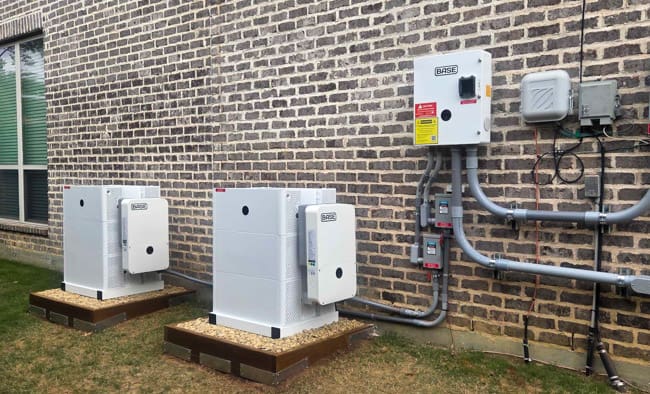
If you’re considering battery backup for your home, Tesla’s lease isn’t your only option. You can also look at battery service programs like Base Power or purchase a Powerwall and own the system yourself. Each option comes with different costs, commitments, and levels of flexibility, so let’s take a closer look at how they compare.
| Feature | Tesla Powerwall Lease | Base Power | Purchase & Own a Powerwall |
| Battery System | 2 Powerwall Units | 39.2 kWh Battery System | System sized to your home’s energy needs |
| Upfront Installation | No installation cost | Installation included under Base’s program | Purchase + installation cost; pricing depends on system size and installation complexity |
| Monthly Cost | $122/mo. in Year 1; $87 Tesla Electric credit can reduce it to $35/mo. | Pricing varies by plan and installation | No battery lease payment |
| Required Electricity Provider | Tesla Electric | Base Power | Choose your electricity provider |
| Ownership | Tesla | Base Power | You own the Battery |
| If you move or Cancel | Lease may be transferable or bought out if eligible | Agreement can transfer to new homeowner: $500 deinstallation fee if cancelled during the 12-year battery agreement | You own the system and can transfer it with the home or retain when appropriate |
At the end of the day, the right battery solution is about more than the monthly payment. Your home’s energy needs, future plans, electricity provider, solar compatibility, and how long you plan to stay in the home can all affect which option makes the most sense. Taking the time to look at the full picture can help you choose a solution that works for you today and continues to make sense years from now.
Key Takeaways
Tesla’s Powerwall Lease can make battery backup more accessible for some Texas homeowners, but the advertised monthly payment is only part of the picture. The lease includes a number of specific requirements that you should read before signing it.
For homeowners who already have solar, plan to add solar, or simply want more control over their energy system, purchasing and owning a Powerwall may be a better fit. While ownership requires a larger upfront investment, it gives you greater flexibility over your electricity provider, your energy system, and how you use your battery long term.
There’s no one-size-fits-all answer when it comes to home energy. At Good Faith Energy, we can help you understand your options, compare the trade-offs, and find the battery solution that makes the most sense for your home and your long-term energy goals.