
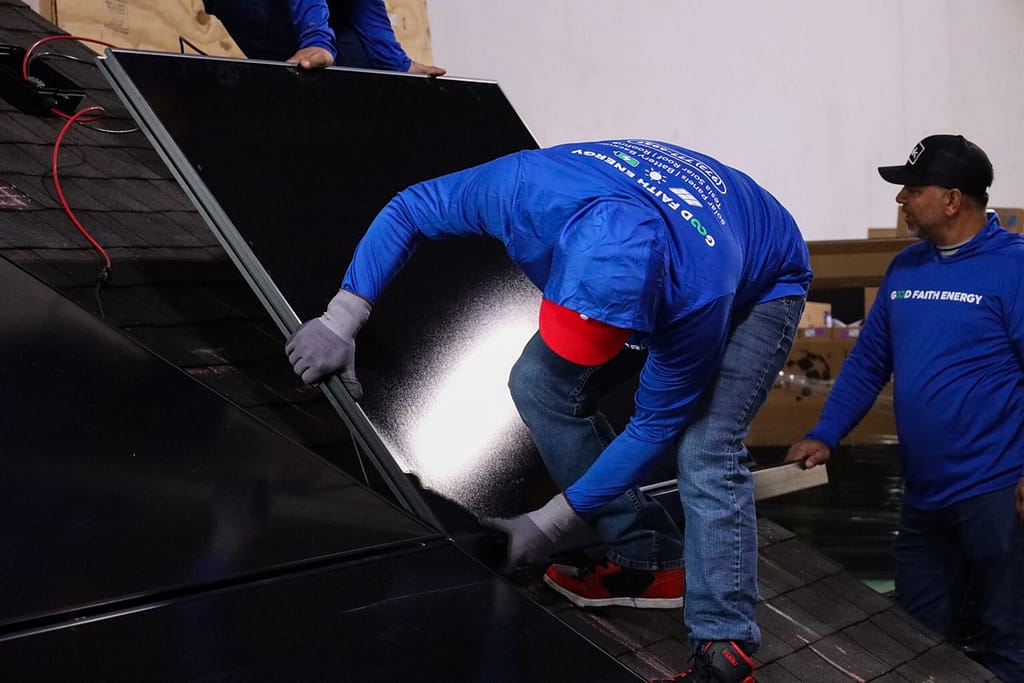
You’ve probably seen the headlines about Tesla’s new solar panels rolling off the line in Buffalo, New York. But when most solar panels look nearly identical on paper, real innovation doesn’t happen in headlines, it happens beneath the glass. Here’s what you really want to know: Are Tesla solar panels worth it in 2026, or is this just another flashy announcement from Elon Musk?
Tesla finally built panels that don’t look like your neighbor’s clunky 2015 setup. We’re talking sleek, shade-proof technology that pairs perfectly with battery storage, all made right here in the U.S. with no tariff headaches or shipping delays.
Tesla’s newest 420-watt module isn’t just a higher wattage panel. It’s an architectural redesign of how a residential solar panel is mechanically built, electrically segmented, and integrated into a full energy ecosystem.
This isn’t cosmetic refinement. It’s engineering refinement.
This post explains how Tesla’s 420W panel is built differently, how it performs in real-world conditions, and who it’s best for. While cost and ROI still matter, the bigger story is long-term performance and durability.
What Makes Tesla’s TSP-420 Panels Different
Tesla’s new panels pack a serious punch in a slim package. The TSP-420 model cranks out 420 watts per panel with 20.5% efficiency, putting it right up there with premium brands like SunPower. But here’s where it gets interesting: these panels use 18 independent power zones instead of the usual three.

What does that mean for you? If a tree branch shades one corner of your roof, or a chimney casts a shadow in the afternoon, most solar panels lose a huge chunk of their output. Tesla’s 18-zone system keeps the rest of the panel working at full power. It’s like having 18 mini solar panels instead of one big one that quits when part of it gets covered.
Mechanical Design & Construction
The Tesla 420W panel uses a 40-millimeter architectural aluminum frame, compared to the 30-millimeter frames used by most traditional residential panels.
That additional depth:
- Increases structural rigidity
- Improves wind load performance
- Allows Tesla to fully integrate the mounting system directly into the panel
Traditional systems rely on exposed rails, clamps, and bolt-on skirts. Tesla eliminates those components.
The panel mounts closer to the roof plane, reducing:
- Uplift forces
- Visual clutter
- Long-term hardware fatigue
The result isn’t just aesthetic. It reduces potential failure points over decades of thermal cycling and weather exposure.
Electrical Architecture: 18 Independent Power Zones
Most residential panels are divided into six power zones governed by bypass diodes.
Tesla’s 420W module is built with 18 independent power zones, created by increasing the number of substrings across the panel.
In practical terms, this means:
- Partial shading from vents, chimneys, trees, or snow impacts only a small section of the module
- Reduced mismatch losses
- Improved partial-shade efficiency
- More stable real-world output
Instead of behaving as one large electrical surface, the module behaves more like a distributed electrical system – even without relying solely on MLPE.
Tesla TSP-420 Solar Panel Specs
- Power Output: 420W
- Efficiency: 20.5%
- Dimensions: 71.1″ x 44.7″ x 1.57″
- Weight: 49 lbs
- Temperature Range: -40°F to 185°F
- Power Zones: 18 independent
- Warranty: 25 years
The panel uses a 360-cell layout arranged in a 6×60 configuration, which lowers current per substring.
Lower current results in:
- Reduced resistive (I²R) losses
- Less heat buildup
- Improved long-term reliability
- Better performance consistency across temperature swings
Because substrings are smaller, voltage drop from shading is isolated faster and more efficiently than in conventional six-zone layouts.
Thermal & Environmental Resilience
Beyond electrical segmentation, Tesla reinforces environmental durability.
The panel features:
- Thermally pre-stressed 3.2-millimeter glass
- Fully sealed IP68-rated junction box
- Operating range from –40°C to 85°C
- Hail testing at 35mm ice traveling over 27 m/s
This isn’t just about surviving storms. It’s about maintaining electrical stability under extreme environmental stress.
Installation is also faster thanks to rail-less mounting. Traditional home solar installation requires aluminum rails across your roof, which adds installation time and creates those visible lines you see on most solar homes. Tesla’s system uses hidden hardware that sits flush against your roof. The result looks cleaner, installs faster, and costs less in labor.
If you’re considering Tesla’s 420W solar panels for your home, the next step is getting a custom evaluation. Every roof, energy profile, and shading condition is different. Fill out the contact form at Good Faith Energy to request a tailored system design and performance estimate from our Tesla-certified team. We’ll help you determine whether this level of engineering makes sense for your home.
Why U.S. Manufacturing Matters to Your Wallet
Tesla fired up their Buffalo solar factory in late January 2026, bringing solar panel production back to American soil. This isn’t just about jobs (though they’re aiming for 100 GW of annual production and eyeing Arizona for expansion). It directly impacts your project timeline and budget. Domestic production allows tighter quality control, faster iteration, and closer alignment between panel engineering and system-level hardware development.
When panels ship from overseas, you’re looking at 8 to 12 weeks of lead time. With US-made Tesla panels, shipments arrive in 2 to 4 weeks. That means you could go from signing a contract to flipping the switch in under two months instead of waiting half a year.
There’s also the tariff angle. Imported solar equipment gets hit with taxes that manufacturers pass straight to you. Domestic production sidesteps all that, helping keep costs competitive even though Tesla’s technology is premium.
Powerwall 3 Integration: The Missing Piece
Here’s where Tesla’s system really shines: Powerwall 3 integration. Most solar setups require piecing together panels from one company, batteries from another, and inverters from a third. Tesla built everything to work together from day one.
The Powerwall 3 stores 13.5 kWh of energy (enough to run your fridge, AC, and essentials during an outage) and delivers 11.5 kW of continuous power. The built-in inverter handles up to 20 kW of solar input, enough to connect a full roof solar panels system without adding extra equipment.
How Powerwall 3 Works Step-by-Step
- Tesla panels on your roof generate DC power when the sun hits them
- Power flows directly to your Powerwall battery’s built-in inverter
- The inverter converts DC to AC power your home uses
- Excess energy fills your battery for nighttime or outages
- When the battery’s full, surplus power goes back to the grid for credits
The Tesla app ties it all together. You can watch energy flow in real time, see exactly how much you’re generating versus using, and set the system to prioritize backup power or bill savings. For off-grid home energy goals, you can stack multiple Powerwall units for days of backup power.

What You’ll Actually Pay (And Save)
Pricing remains competitive within the premium tier.
However, Tesla’s engineering focus is not the lowest upfront cost per watt.
It’s maximizing:
- Usable energy over time
- Performance stability
- Reduced degradation under partial shading
- Lower lifetime hardware risk
To get an accurate picture, speak to our experts before you commit. Your actual savings depend on utility rates, roof angle, and electricity usage.
The Honest Pros and Cons
Pros:
- Shade-proof 18-zone design keeps production high even with tree cover
- 25-year warranty backs both panels and performance
- Ecosystem simplicity means one app, one company, fewer headaches
- 420W efficiency means you need fewer panels for the same output
Cons:
- Premium pricing runs higher than budget brands
- May exceed needs for simple, unshaded roofs
- Some older roofs need compatibility checks or reinforcement
Real users in sunny states are reporting faster ROI than expected, thanks to high sun exposure and shade tolerance.
Performance & Payback in Texas Conditions
In high-sun regions like Texas, a properly sized solar system can deliver strong long-term returns. With abundant sunlight and rising utility rates, solar production potential remains high across much of the state.
However, Tesla’s primary differentiator isn’t just total annual output. It’s performance under non-ideal conditions. Shading, complex rooflines, extreme heat, and environmental stress are where conventional panels often lose efficiency. Tesla’s 18-zone segmentation and reinforced construction are designed to maintain more stable real-world production over time.
Additionally, pairing the system with a battery provides reliable backup power during outages, keeping your home running even when the Texas grid goes down due to peak demand or extreme weather events. Energy independence becomes part of the value equation, not just bill reduction.
Texas electricity rates have been climbing roughly 3-5% annually, which naturally accelerates long-term payback. When you also stack available incentives- the 30% federal tax credit, local utility rebates, and Texas property tax exemptions for solar- upfront costs decrease significantly.
For many homeowners, this combination of high solar production, rising rates, and incentive stacking results in full system payback in approximately 8 to 10 years, depending on usage patterns and system size.
Who Should Pull the Trigger
These panels make sense for:
- Complex roof geometries
- Partial shading
- Homeowners prioritizing durability and system intelligence
- Long-term property holders
Skip Tesla if:
- You prioritize lowest upfront cost over engineering refinement
- Your roof is fully unobstructed and performance segmentation adds minimal benefit
These panels make sense if you have a sunny roof with minimal shade, electric bills above $150 monthly, plan to stay home 8+ years, and have interest in energy independence or Tesla’s ecosystem.
Skip Tesla solar panels if your roof is heavily shaded, your budget is tight, or you’re moving soon.
Think you might be ready to pull the trigger on solar this year? Here’s what you should do next: Get a free custom quote from Good Faith Energy, Texas’s top-rated Tesla-certified installer.
Final Thoughts
Are Tesla’s new U.S.-made solar panels worth it for your home in 2026? For most Texas homeowners with good sun exposure and high electric bills, yes. The shade-tolerant technology, seamless Powerwall integration, and domestic manufacturing make these panels a solid investment, paying for themselves in 8 to 12 years while delivering 25+ years of clean power.
That 30% federal solar tax credit drops to 26% in 2033, so every year you wait costs thousands in savings. Good Faith Energy’s Tesla-certified team can maximize your incentives and custom-fit a system to your roof. Contact us today for your free custom quote and lock in those benefits before they shrink
Fact checked by Lisa Musser on 2/19/26.